
• Skip to primary navigation
  • Skip to main content
Thrive

Thrive

Evidence based holistic coaching and therapy to unearth what is standing in the way of discovering your best self.

  • Home
  • Meet Us
    • Dr. Hannah Joy Roberts
    • Dr. Sarah Joy Park
    • Ellen M. Jones
    • Kate Berman
  • Therapy Services
  • Schedule a Session
  • LGBT+ Resources
  • Blog
  • Contact

Dr. Hannah Roberts

Dr. Hannah Roberts · September 7, 2017 ·

A Simple Strategy To Survive College For First Year Students

Dear New College Student:

Congrats! You have made it through that magical, frustrating experience that is high school and are headed off to college! Here is a simple strategy to survive college:

Take It Slow

Didn’t see that one coming? I know. I’m sure everyone in your life is telling you that “these will be the best years of your life.” And you’re getting a lot of advice about making friends, joining every club, going Greek, getting a job, and even how to drink as a university student. All those to-dos can leave college freshmen and transfers nearly paralyzed with overwhelm. So let’s try something different: take your time. Slow down and get tour bearings before you dive in.

Relationships

Yes, relationships are an important part of how to survive college. Know that the first people you meet in college do not need to be your forever friends or your future spouse. Many friendships are built around shared experiences, and while there are many wonderful experiences during Orientation/Week of Welcome, there are often many more bonding moments throughout life. Your roommate does not need to be your sister from another mother – be aware that roommates often have their own honeymoon phase where they first are amazed by all of the wonderful similarities they have, but then quickly spiral into tense arguments when differences show up.

Sex

And, speaking of relationships, sex can wait too. Just because you haven’t yet doesn’t mean you never will. And if you’re not really interested, it’s probably a sign not to push through or to let the other person convince you. Believe me, it’s not worth saying “yes” because you can’t think of why to say “no.” Survive college with fewer hookup regrets.

Parties

When it comes to parties, don’t do anything that doesn’t feel right. You do not need to prove your worth based on how many shots you’ve taken. Not everyone drinks in college and just because you don’t drink tonight doesn’t mean you never will. Survive college without incurring underage drinking or possession of alcohol charges, as well as avoiding hospital visits for alcohol overdose.

Greek Rush

Don’t rush into Rush. Focus on getting grounded and having a positive routine before you think about Greek Life. Fraternity and sorority recruitment take up an incredible amount of time and quite an emotional toll as well. It’s easy to lose track of all that’s happening in your life when you’re headed from one event to another. Maybe that’s why they call it rush? Many universities delay rush for that reason. If you have a choice to think about rushing in winter or spring, or even your sophomore year, choose that! You will end up knowing so much more about the chapters that you choose and you will feel great about them choosing you on bid day.

Schedule It!

One other simple strategy to take it slow and survive college? Put all of the following into a schedule (you can use your calendar on your phone) and protect that schedule no matter what!

  • Time For You: Find quiet spaces where you can connect with yourself. Don’t forget who you are in this time of transition.
  • Study Time: Break your assignments and studying down into small, manageable slots most days. Don’t save long, epic cramming sessions for right before finals.
  • Office Hours: Your professors are there to help, but it’s your responsibility to show up and prove you want to learn. Office hours are a great way to demonstrate your commitment to success, as well as to get to know your faculty.
  • Nutrition: Eat slowly and mindfully. This also helps with those of you that get tummy troubles when you have stress or anxiety. Looking for more tips on how to eat mindfully – check out this blog post by Dr. Albers, a mindful eating specialist.
  • Move Your Body: Exercise is a fantastic way to break up an academic day and keep your mind and body healthy and balanced.
  • Sleep: Try to keep sleep as consistent as possible for optimal brain functioning. Go to bed at the same time most nights and try to aim for seven to nine hours of sleep!

Feeling anxious? Not sure how to make this first year work for you? Got caught in all the excitement and  now you’ve fallen behind? We are here for you! Contact us today to schedule a consultation and see if coaching or therapy is right for you!


 

Dr. Hannah Roberts · September 1, 2017 ·

Four Things Every Parent Needs To Practice When Their Student Leaves For College

Letting Go

For the last 18 years or so, a main part of your identity has been about being a parent. You’ve been known as “Emily’s mom.” Your days have been structured around your child’s schedule: what time school begins, what lunch needs they have, what time you have to get to practice, and what groceries need to be picked up. Your house has been constantly filled with the ambient sounds of childhood: first the crying, cooing and babbling; then the sounds of playtime; and more recently, the musical tastes of teens (but let’s admit it: you liked some of their music). And now, everything is eerily quiet. Your days feel strangely empty. Shouldn’t you be doing something? Shouldn’t you be worried about something?

These first few months after your student leaves for college can be disconcerting. And when stressors do arise – you feel helpless and unsure how to help. You can’t just swoop in like you did before. There is the physical distance standing in your way, as well as the legal (yes, the dreaded FERPA restrictions), and psychological distance. That distance can feel like a giant abyss between you and your child.

Your instinct is to leap over that chasm and keep doing what you’ve been doing. At this point, you’ve been worrying and hovering over every scraped knee and every tear shed – it is a comfortable and familiar role for you! And now, today is the day to try something different. And it will be ok.

Giving Some Space

You want nothing more than for you child to be a fully functioning adult. Truly, you want that even more than you want to feel needed. And the only way your child is going to mature into an adult is to learn by doing. And to learn what not to do by doing, as well.

They will make mistakes (so many mistakes). They will change their mind (so many times). They will be disappointed. They will feel rejected. It’s going to hurt to watch these things play out or to see them make choices that may be different from those you would choose for them, but this is the only way for them to learn and grow.

Your role is to now serve as a consultant or advisor… from a distance. When they ask you for help, don’t deny it, but instead reflect questions back to them, asking them what solutions they can think of, including what they think would work best and what they think they can do. Your child’s [perceived] lack of success is not your failure. If you need to vent about these struggles, find an alternative listening ear and keep a neutral, reflective approach when you talk with your student.

Making Communication Clear

If you haven’t already had a conversation with your child about communication, now is the time. Talk about what their preference is and talk about what’s realistic for you. Find a middle ground if possible and talk about emergencies as well. At minimum, it’s probably best to have a dedicated once-weekly check-in time. I’m guessing early in the morning isn’t great for them, and late at night is not so good for you. We’ve often found Sunday afternoons are most convenient: there’s not as much happening on campus and you will be a welcome study break for them.

You might also discuss texting – how much is too much (for them) and how much is too little (for you). Most students welcome fun update texts (with pics of the family dog) that do not require a response. If you do need a response to a text, state that clearly in your message and include a specific time frame.

Set a reasonable expectation for home and campus visits. It is often helpful if your student can stay mostly on campus their first term. If they are missing you (or you are missing them), it might be easier for you to visit them. That way, they don’t sacrifice study time for travel and they can show you their space and introduce you to friends and roommates.

Finding Your Own Path

Be sure to acknowledge all of the many emotions you may be experiencing, both the positive and negative ones. Most of us get really uncomfortable with negative emotions… we don’t like feelings like grief, sadness, and fear. Yet, these are going to be very normal parts of your transition. Acknowledge all emotions, but do not make it your child’s responsibility to soothe those emotions, or expect your student to have the same emotions. What can be helpful is to identify the core value behind those emotions and reframe them in a positive way. You are sad because you miss someone you love. It’s ok to acknowledge the sadness, but keep the emphasis on the love. And if you find that these emotions are getting in the way of your own thriving, then make sure you find your own support with a parent group (Cal Poly’s Parent Facebook Page is great), your spouse, a great therapist, or coach (more about us here).

Use this newfound space and time to do something positive for yourself. What’s that thing you’ve been wanting to do? Set an example for you child by learning a new skill, picking up a hobby, or fostering a new friendship. You student may have secret fears that all your happiness, hopes, and dreams rest on their shoulder – this can contribute to an unspoken sense of pressure and anxiety. If your child sees that you are doing fine with this change, it lets them know that they can be ok with the change as well.

One last thought: Say “I love you” often. You can’t really say it too much. Even if they don’t always say it back. Words are so much more important when there’s physical distance and your love makes all the difference in your child’s confidence and success.


Dr. Hannah Roberts · August 24, 2017 ·

Dear College Student:

Congrats! You are now a college student! All grown up and moving out and so very ready to start the next chapter of your life! One piece of advice: be yourself.

Here’s the scene: It’s your first day on campus for Orientation or Week of Welcome: everyone arrives on campus checking out whatever everyone else is doing. People are wondering what is normal and what is ok and how to feel accepted. Most people make decisions based on what they think their peers will do and what they see their peers doing. But that ends up being really unhealthy and completely unproductive – you end up having friends you have nothing in common with. You’ll feel like an impostor (a very real issue for college students and you’ll feel suffocated by your own experience.

Instead, take this time to really get to know yourself. Listen to your body and your values and your needs. Make decisions that work for you!

For instance:

  1. As much as possible, schedule your classes at times when you are most awake and productive. You can’t always avoid a 7AM class, but if you’re an afternoon person, try to schedule classes in your sweet spot. Same goes for study times.
  2. Take time for yourself. You don’t need to socialize 24/7 (I’m looking at you, introverts!). You probably now share a room with at least one other person, eat in a noisy environment, and now attend how many hours of classes? It can be hard to hear yourself over all that noise, so take some time for yourself. For most people, that can mean finding a quiet spot outside, going on a hike, or taking advantage of your campus’ meditation room, massage chair, or napping pod.
  3. Wear what’s comfortable for you. College is one of the few times in your life where you have absolutely no dress code. Express yourself through your clothing and be comfortable – you will find yourself better able to focus.
  4. Try something you’ve always wanted to. College is all about learning about yourself and there should be plenty of opportunities in your campus clubs or college town to try out new activities or hobbies. Take a pottery class, join the ski club, or try out for a play. If you don’t like it, no one will judge you and you can move on to a new adventure. Who knows? You might just find your life passion and/or your new best friend.
  5. Say no to relationships and hookups that don’t feel good. Life’s too short. Figure out what you want from intimate relationships and friendships and hold out for that. (Note: sometimes it takes a few bad experiences to find out very clearly what you don’t want. Don’t beat yourself up about it, but don’t keep repeating the same regrets).

College is a time to truly get to know yourself. You are the one person that you will spend the rest of your life with, so why not start off becoming the best version of yourself today?!

Having a hard time figuring out who you are and what you want? Not feeling great about navigating the college experience? Already paralyzed by stress and anxiety? We are here to help! Schedule your video coaching session today to make this year your best year yet!

Dr. Hannah Roberts · March 30, 2017 ·

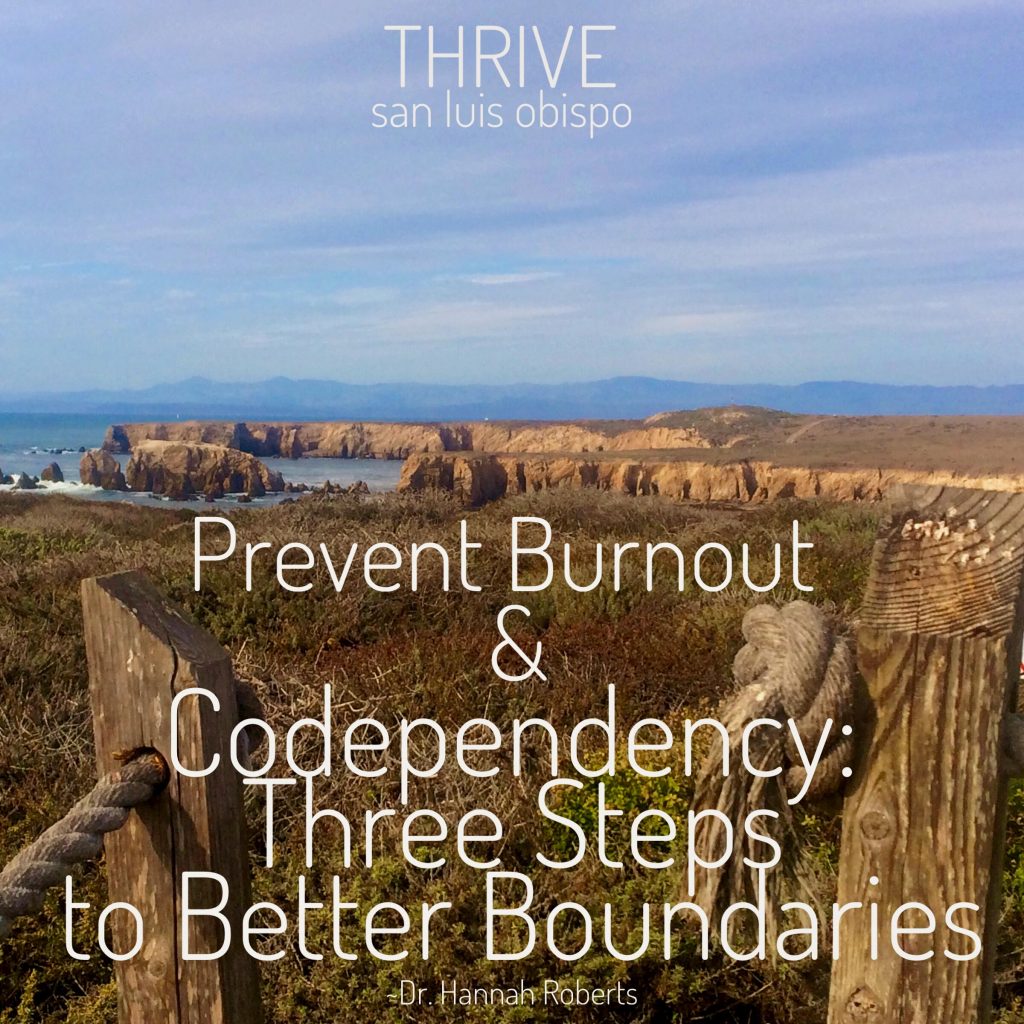
Boundaries are a good thing.

I love to say “yes!” Enthusiastically. And often.

Need help with a project? Sure! Going on an adventure? Yes, please! Need an extra hand? Happy to help! Reading an interesting book in book club? Count me in!

Nothing makes me happier than saying “yes” – there are so many interesting opportunities out there! I am a connector by nature: I feel good when I am helping others. I love feeling like I’m giving back and sharing the abundance of enthusiasm and curiosity life has blessed me with.

However, I’ve found that the more things I say yes to, the more likely I am to feel overwhelmed. I end up perpetually running late and feeling guilty. Eventually, I find myself tired, cranky, and exhausted. This occasionally results in a tearful breakdown; canceling plans; catching that cold that’s going around; or worse (for me) getting irritable and inpatient with those I love. One of the worst symptoms of burnout is losing touch with your empathy and no longer caring about the people and things that were once important to you.

And I know I’m not the only one. Much of my work as a psychologist in San Luis Obispo has been with clients, especially women, discovering boundaries for the first time. I have seen women go on dates, and continue sexual relationships because:

“I can’t let him down.”

“I don’t want to hurt him.”

“I’m not really sure what I do want.”

I have seen women (and men) take on extraordinary workloads in the office saying:

“I can’t disappoint anyone.”

“I don’t want to seem like I’m not pulling my weight.”

“I can’t let my team down – they are counting on me.”

So many individuals are exhausting themselves, wearing themselves thin, and at times, putting themselves in uncomfortable situations because they do not feel comfortable saying “no.” Our culture has not only glorified “being busy” but it has created generations of women that feel they can’t express themselves, can’t be honest about their feelings or their energy level, and most certainly, can not say “no.” This creates codependent relationships, burnout on the job, and overall soul fatigue.

“Setting boundaries is challenging for most people. It’s especially challenging for holistically inclined women, because we tend to want to merge and connect – with everything. For some of us, learning to set healthy boundaries will be the undertaking of our lifetime, the ultimate work of self-reverence”                   ~Danielle LaPorte, White Hot Truth

In Need of Better Boundaries

What I continue to work on, with my clients in therapy and also within my own internal dialogue, is continuous gentle reminders that boundaries are good. Boundaries are protective, they are healthy, and ultimately, maintaining boundaries is the respectful and kind thing to do.

If you let your supervisor know that you are overwhelmed on project A and really need to give it a good solid week of undivided attention before you move on to project B, they will appreciate your clarity and focus. If you tell your book club you can’t make it, as you were so looking forward to that yoga workshop Friday, but you’ll happily host next month, they’ll be looking forward to that. And if you tell Mr. super sweet, but not right for you that you don’t really see where things are going and you’re not interested in dragging things out, he gets to move on and find someone who is actually a better fit sooner.

Boundaries are good for me and they are good for the people I interact and communicate with. If I care about something, I want to be able to give it 100% of my attention. And while there is always so much to enjoy in life, I’ll never get through all of it, so I’d rather focus with clarity on the top choices.

Three Ways to Set Clear Boundaries:

  1. Set a schedule and stick to it. Bonus step: Let those around you know about your new and improved schedule and that you will be following it with no exceptions. Then no one is surprised when you hold your boundary. As I was actively working to change my relationship to my work and to set clear boundaries around my time, I began to share my process with my colleagues, who then became my cheerleaders.
  2. Remember that when you say no to one thing, you are saying yes to something else! Each time you say “no” aloud, gently whisper to yourself what this no allows you to say “yes” to. Make a list in your planner each week of what your priorities are and hold those things sacred. Putting your yeses first allows you to be clear about what might need a boundary.
  3. Most of us have a hard time using negative language. And many people have negative reactions to negative language. Instead of “no”, you could try using positive language instead. Try something like “here’s what I can do…” Be clear in your communication.

Get Support!

Often, setting boundaries takes multiple attempts, especially if there are people in your life that do not respect healthy boundaries. If this is something you’ve been struggling with, know that therapy can be a great place to safety practice boundaries. You can try on different ways of saying things, explore the areas that feel in need of boundaries, and even develop your list of priorities. This is an area where most of us need support! Is there a strategy that has been particularly helpful for you? We’d love to hear it! Please share your ideas in the comments below!


Dr. Hannah Roberts · March 15, 2017 ·


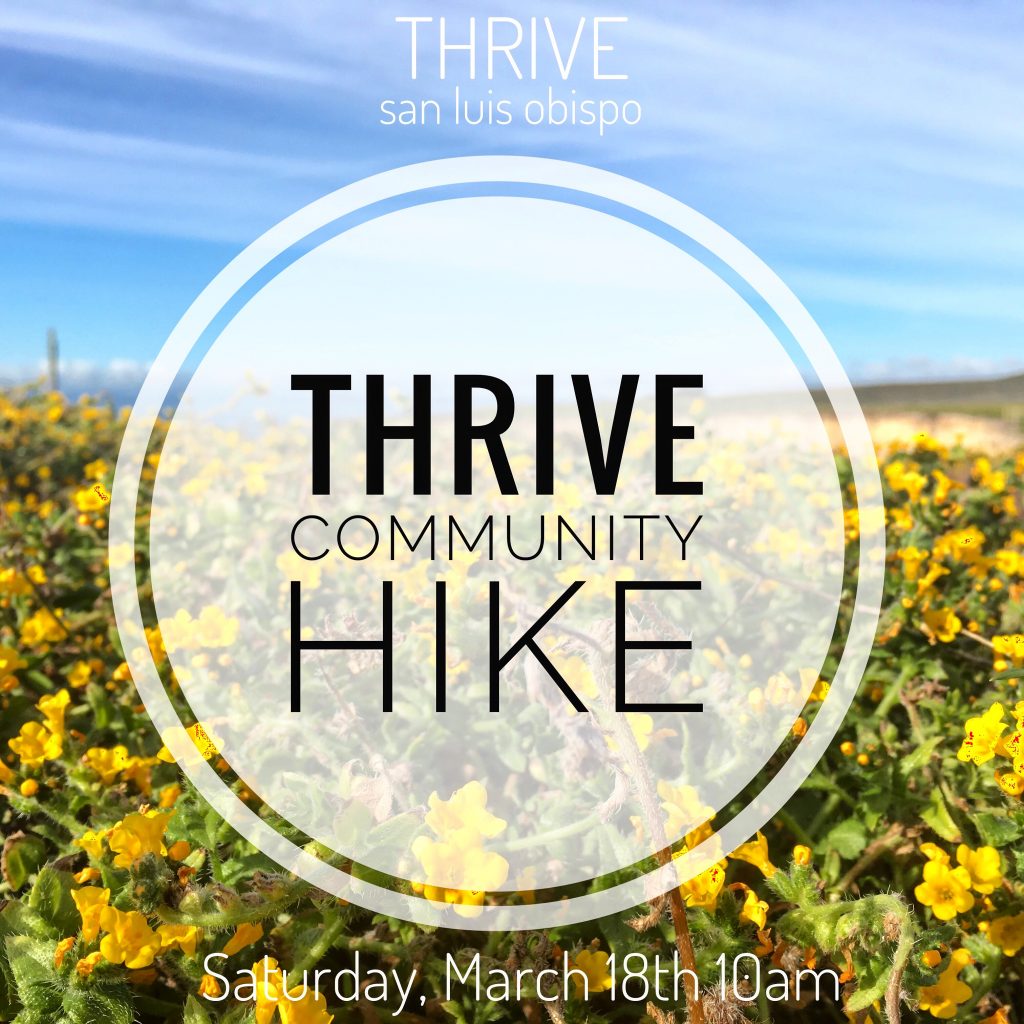
Join us for a Community Hike at Montana de Oro State Park

At Thrive SLO, we try to be intentional about our own self care and we love fostering community with like minded individuals! We’re hoping to create quarterly community events, always free of charge, that allow you to better get to know us and deepen our sense of community in the San Luis Obispo area.

Let’s get together this Saturday for a gentle community hike at Point Buchon in Montaña de Oro! Open to all – no hiking experience necessary. Meet the founders of Thrive San Luis Obispo, psychologists Dr. Sarah Park and Dr. Hannah Roberts, and join our growing community of like-minded Thriving individuals. In celebration of the spring equinox, we’ll be informally chatting about starting fresh and, as always, we’ll be discussing other ways we hope to bring more holistic wellness and thriving to our daily lives.

When: This Saturday, March 18th at 10am.

Where: Point Buchon Trail, Montaña de Oro State Park. To get to the Point Buchon Trail: Take the road into Montaña de Oro State Park ( 3550 Pecho Valley Rd, Los Osos, CA 93402) as far as you can go – the road ends in a parking lot. Park there and meet us at the gate! For more info about the trail, visit: Diablo Canyon Trails

Can’t wait to see you!

  • « Go to Previous Page
  • Page 1
  • Interim pages omitted …
  • Page 5
  • Page 6
  • Page 7
  • Page 8
  • Go to Next Page »
"My mission in life is not merely to survive, but to thrive; and to do so with some passion, some compassion, some humor, and some style."
~Maya Angelou

Thrive

Copyright © 2026 · Thrive - San Luis Obispo · Log in